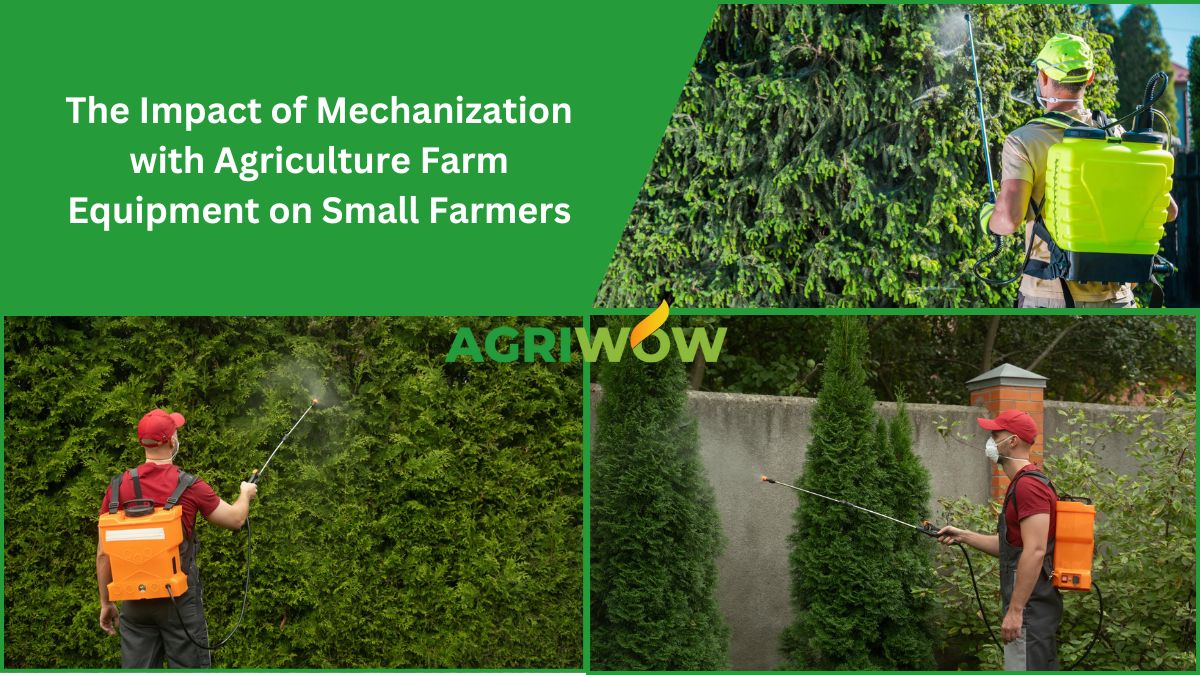
Across India, small farmers have long carried the weight of agriculture on their shoulders. For decades, most tasks were done manually, demanding time, effort, and physical endurance. But with the rise of mechanization and easier access to agriculture farm equipment small farmers are finally experiencing a shift toward smarter, faster, and more profitable farming.
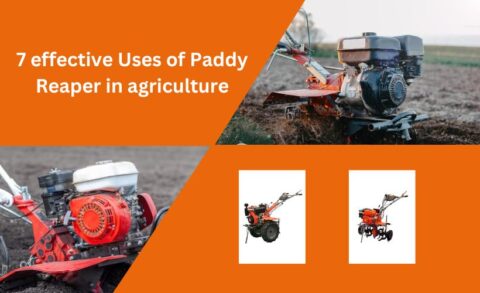
Machines like mini tillers, weeders, rotavators, and sprayers are helping farmers overcome labour shortages and rising wage costs. A machine that completes a day’s work in just a few hours can completely change how a farmer manages time and resources. More importantly, mechanization brings precision. Whether it’s sowing seeds or spraying crops, modern tools ensure uniformity, reduce wastage, and support better crop health.
For small farmers who cannot always afford to purchase machines, custom hiring centres and rental services provide an affordable gateway to modern technology. This model allows them to benefit from improved efficiency without heavy financial investment. With improved productivity and access to better tools, farming becomes more profitable, less physically demanding, and more sustainable.
Reduced prices of farm equipment under GST 2.0 will support air pollution abatement efforts.
The introduction of GST 2.0 has made several essential machines more affordable, especially as farm equipment prices have become more farmer-friendly. This reduction in tax rates is a significant relief for small and marginal farmers who once found it difficult to invest in machinery.
Lower prices don’t just support affordability they also encourage sustainable farming practices. In states where crop residue burning is common, farmers often burn stubble because they lack proper residue management tools. With lower GST rates, equipment like mulchers, rotavators, and straw choppers become accessible, helping reduce the practice of residue burning and, in turn, controlling air pollution.as
GST 2.0 also promotes greener tools such as battery-operated sprayers and energy-efficient machines. By allowing farmers to access advanced technology at lower prices, the policy contributes not only to economic growth but also to environmental wellness.
Affordable, modern equipment promotes precision especially during spraying where the right machine can cut down chemical drift and minimize harmful emissions. This shift towards cleaner, more efficient machinery supports long-term air pollution abatement goals.
Environmental Impact Assessments of Using Different Types of Agriculture Sprayer Machines

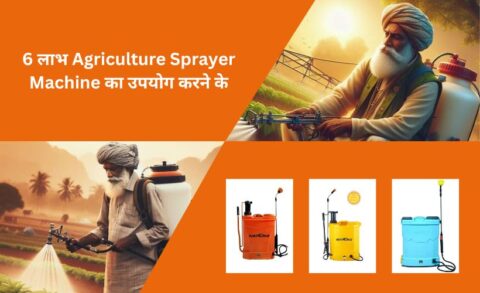
Sprayers are essential for crop protection, but each type has a different effect on the environment. Understanding these impacts through environmental assessments helps farmers make more informed choices. The adoption of a modern agriculture sprayer machine can significantly influence soil health, water safety, and air quality.
1. Manual Sprayers
Manual knapsack sprayers are affordable, but they rely heavily on human labour and often lead to uneven application. Incorrect spraying can cause overuse of chemicals, harming soil organisms and contaminating nearby water bodies. Although they have no carbon emissions, they pose risks to farmers due to direct chemical exposure.
2. Battery and Electric Sprayers
Battery sprayers offer consistent, uniform spraying with reduced labour effort. They prevent chemical overuse and minimize spray drift, making them more eco-friendly. Their low emissions and safer design make them a preferred choice for sustainable farming.
3. Power Sprayers (Petrol or Diesel)
Power sprayers cover large areas quickly and operate at high pressure. But they run on fuel, which means emissions, noise, and a higher carbon footprint. Careless use can also result in excessive pesticide application. Many newer models now incorporate better emission controls to reduce environmental harm.
4. Drone Sprayers
Drone sprayers represent the future of sustainable farming. They use less pesticide, prevent soil compaction, and keep farmers away from direct chemical exposure. Environmental studies show that drones significantly cut down spray drift and reduce carbon emissions. The only limitation is the higher initial investment.
5. Tractor-Mounted Sprayers
These sprayers are effective for large farms but consume more fuel. However, modern nozzles and GPS-based systems allow precise chemical application, reducing waste and minimizing environmental damage. Proper calibration and training are crucial for safe use.
Conclusion
Mechanization is transforming agriculture for small farmers, making it more productive, less labour-intensive, and more sustainable. With reduced GST rates lowering farm equipment prices, access to modern tools is no longer out of reach. At the same time, better environmental practices especially through improved sprayer technologies are reducing pollution and protecting soil and water health.
Whether adopting advanced machinery or looking to buy garden tools for small-scale operations, farmers today have more options than ever before. As technology becomes more accessible, the future of Indian agriculture looks cleaner, smarter, and more promising.
FAQ
1. How does mechanization help small farmers increase their income?
Mechanization reduces dependency on manual labour, speeds up farm operations, and improves accuracy in tasks like sowing, spraying, and harvesting. This leads to healthier crops, higher yields, and better market returns. With machines taking over time-consuming work, farmers can also cultivate larger areas, directly increasing their income.
2. Are the reduced GST 2.0 rates really making farm equipment affordable?
Yes. GST 2.0 has significantly lowered the tax rates on many essential agricultural machines, making them more accessible to small and marginal farmers. This drop in farm equipment prices encourages wider adoption of tools like sprayers, weeders, and residue management machines, helping farmers work efficiently while supporting pollution control efforts.
3. Which type of sprayer machine is most environmentally friendly?
Battery-operated and drone sprayers are considered the most eco-friendly. Battery sprayers reduce chemical drift, avoid overuse, and have minimal emissions. Drone sprayers take it a step further they use less pesticide, eliminate soil compaction, and keep farmers away from chemical exposure. Both are highly effective in achieving precise and environmentally safe spraying.